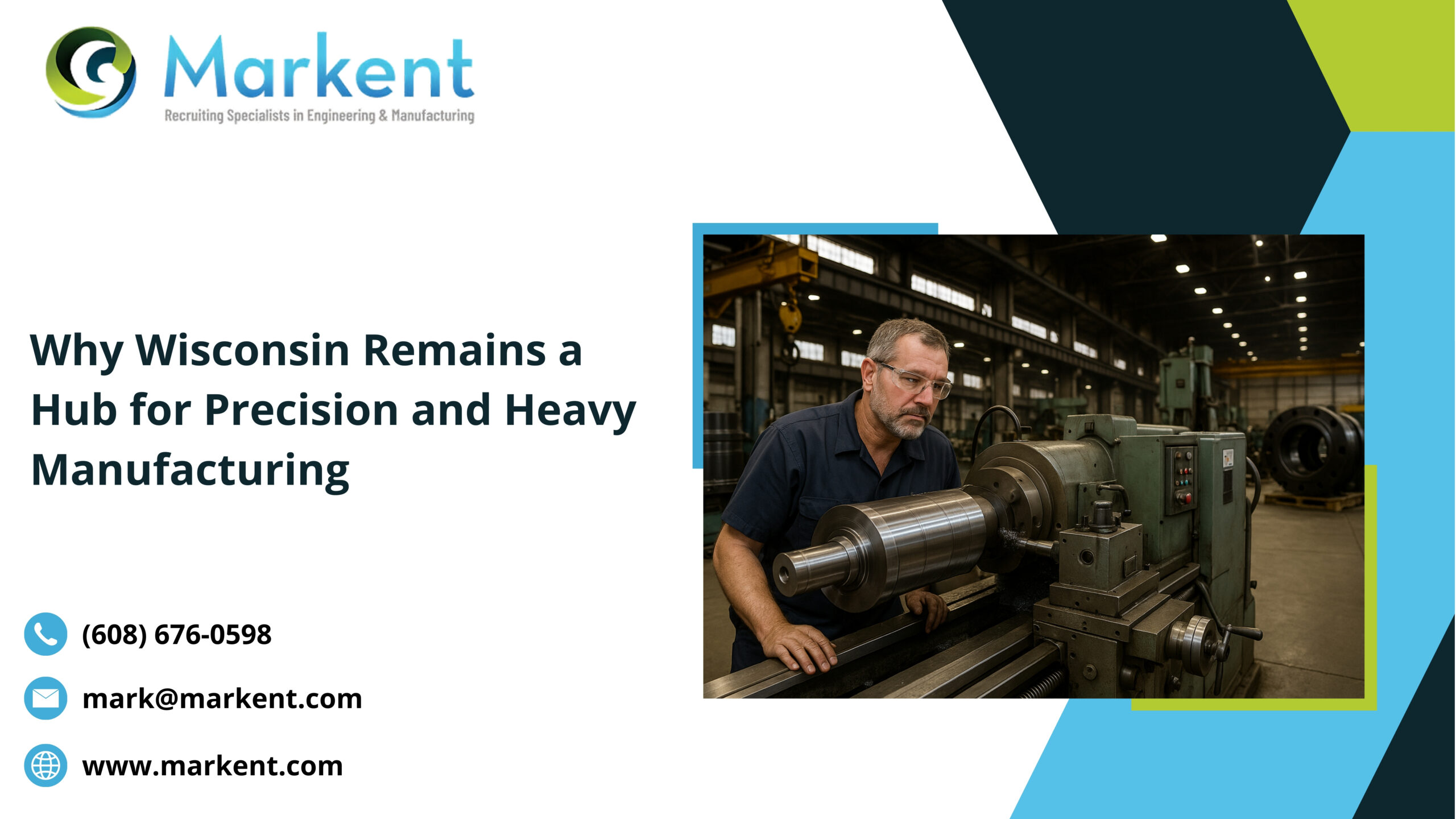
In 2025, Wisconsin’s manufacturing industry remains one of the nation’s most resilient and innovative sectors. Known for its roots in precision machining, metal fabrication, heavy equipment engineering, and advanced production systems, the state is not just holding onto its manufacturing heritage; it’s evolving it.
As the labor market remains tight and workforce expectations continue to evolve, manufacturers across Wisconsin are adopting new strategies to attract, engage, and retain talent. The emphasis has shifted from simply “filling vacancies” to building long-term, future-ready teams capable of adapting to the rapid technological and cultural shifts shaping the industry.
Below are the leading recruitment and workforce trends defining Wisconsin manufacturing in 2025.
- Personalized Candidate Experiences Take Center Stage
The era of generic hiring practices is long gone. In 2026, job seekers expect clarity, relevance, and authenticity at every touchpoint, and Wisconsin manufacturers are responding.
Recruitment teams are now creating tailored candidate journeys that start from the moment someone views a job posting. This includes personalized communication, transparent hiring timelines, virtual or on-site job previews, and recruiter check-ins tailored to each applicant’s background and interests.
Most importantly, hiring managers are focusing on candidate motivations:
- Career advancement
- Work-life balance
- Hands-on problem-solving
- Long-term skill development
- Stability and community connection
By identifying what drives each candidate, manufacturers can match individuals with the right roles and ensure a better fit, satisfaction, and retention. Job seekers no longer feel like resumes in a stack, but like individuals whose goals actually matter.
- Flexible Work Arrangements Enter the Industrial Mainstream
Manufacturing is traditionally an on-site, shift-driven industry, but 2025 has pushed employers to rethink rigidity. While the core of production still requires physical presence, factories across Wisconsin are adopting flexible scheduling models to meet modern workforce expectations.
Some of the most successful approaches include:
- Four-day workweeks, particularly in machining and fabrication departments
- Staggered start times, giving employees better control over personal schedules
- Split shifts for parents, students, and caregivers
- Seasonal or project-based work with predictable rotation
- Hybrid roles for engineering, maintenance planning, and technical support
These changes have opened the door for talent previously unable to join the workforce, including working parents, retirees returning part-time, and individuals transitioning from other industries. Flexibility once considered “impractical,” has become a competitive differentiator.
- Skills Training Begins on Day One (Sometimes Before Day One)
Wisconsin manufacturers in 2025 no longer treat training as an afterthought. Instead, upskilling has become a recruiting advantage and a core element of employer identity.
Key shifts include:
- Paid apprenticeships partnering with technical colleges
- On-the-job certification paths for CNC, robotics, and quality control
- Cross-training programs to increase versatility and strengthen succession planning
- Pre-hire training bootcamps, preparing job seekers even before they officially join
This training-first mindset reassures candidates that manufacturing is a place where they can build a long-term, stable, and upward-moving career, not just a job. It also addresses the ongoing skills gap caused by retirements, automation, and evolving production technologies.
- Expanding Talent Pipelines Through Inclusive and Proactive Hiring
In 2025, Wisconsin manufacturers are widening the front door to industries that have historically been underrepresented. Companies are actively increasing outreach to:
- Veterans transitioning into civilian roles
- Women in skilled trades and engineering
- Individuals with disabilities
- Immigrants and multilingual communities
- Second-career professionals and displaced workers
Inclusive hiring isn’t limited to outreach; it’s built into internal processes, too:
- Simplified job descriptions
- Skill-first interview evaluations
- Mentorship networks
- Buddy systems for new hires
- Accommodations that support neurodiverse workers
By expanding their recruiting lens, manufacturers are discovering highly capable talent pools that were previously overlooked.
- Technology and AI Make Hiring Faster and Smarter
Artificial intelligence is transforming how Wisconsin manufacturers hire in 2025. Rather than replacing human recruiters, AI tools assist them by handling repetitive tasks and improving decision-making.
Advanced systems now support:
- Automated résumé reviews
- AI-driven job matching based on skills
- Virtual interviews and digital assessments
- Predictive analytics to identify top-performing candidates
- Bias reduction tools that flag exclusionary language
- Workforce forecasting based on production schedules
This shift allows HR teams to focus more on candidate connection and less on administrative tasks. The result? Faster hiring, greater accuracy, and a more human experience overall.
- Employer Branding Becomes a Critical Recruitment Tool
Manufacturers are realizing that a strong employer brand is as important as competitive pay. In 2025, more companies are intentionally telling their stories to attract talent.
Popular branding methods include:
- Behind-the-scenes plant videos
- Social media spotlights employee success.
- Community outreach events
- Showcasing modern equipment and clean facilities
- Promoting company culture and values
Transparency builds trust, and trust strengthens applications. Candidates want to work where they can envision themselves contributing, learning, and growing. By putting authenticity at the center of branding, manufacturers stand out in a competitive market.
- Community Integration and Education Partnerships Strengthen Talent Pipelines
Local partnerships have become essential in solving Wisconsin’s workforce challenges. Manufacturers are working closely with:
- High schools
- Technical colleges
- Workforce development boards
- Community organizations
- Youth apprenticeship networks
Programs such as manufacturing career fairs, maker labs, high school internships, and dual-credit courses are encouraging young people to explore industrial careers earlier. These initiatives reshape outdated perceptions about manufacturing, showing students that modern factories are clean, high-tech, and full of opportunity.
- Retention Through Culture: Keeping the Workforce You Attract
Recruitment is only half the equation; retention keeps the engine running.
Wisconsin manufacturers in 2025 are prioritizing:
- Mentorship from experienced employees
- Clear advancement pathways
- Mental health resources
- Safety and ergonomic improvements
- Recognition programs that celebrate achievements
- Leadership training to develop future supervisors
These elements build workplaces where employees feel valued and supported. Strong retention also reduces hiring costs, improves morale, and fosters long-term loyalty.
Looking Ahead: Wisconsin Manufacturing in 2025 and Beyond
Wisconsin’s manufacturing sector continues to demonstrate resilience and innovation, even in a challenging labor landscape. The recruitment trends shaping 2025 reflect a shift toward human-centered hiring, valuing flexibility, inclusivity, training, and authenticity.
Manufacturers are proving that staying competitive isn’t just about advanced machinery or efficient processes. It’s about building a workforce that feels seen, supported, and inspired to grow.
As Wisconsin looks toward the next decade, its industrial strength will depend on this simple but powerful truth: The future of manufacturing is people-first.