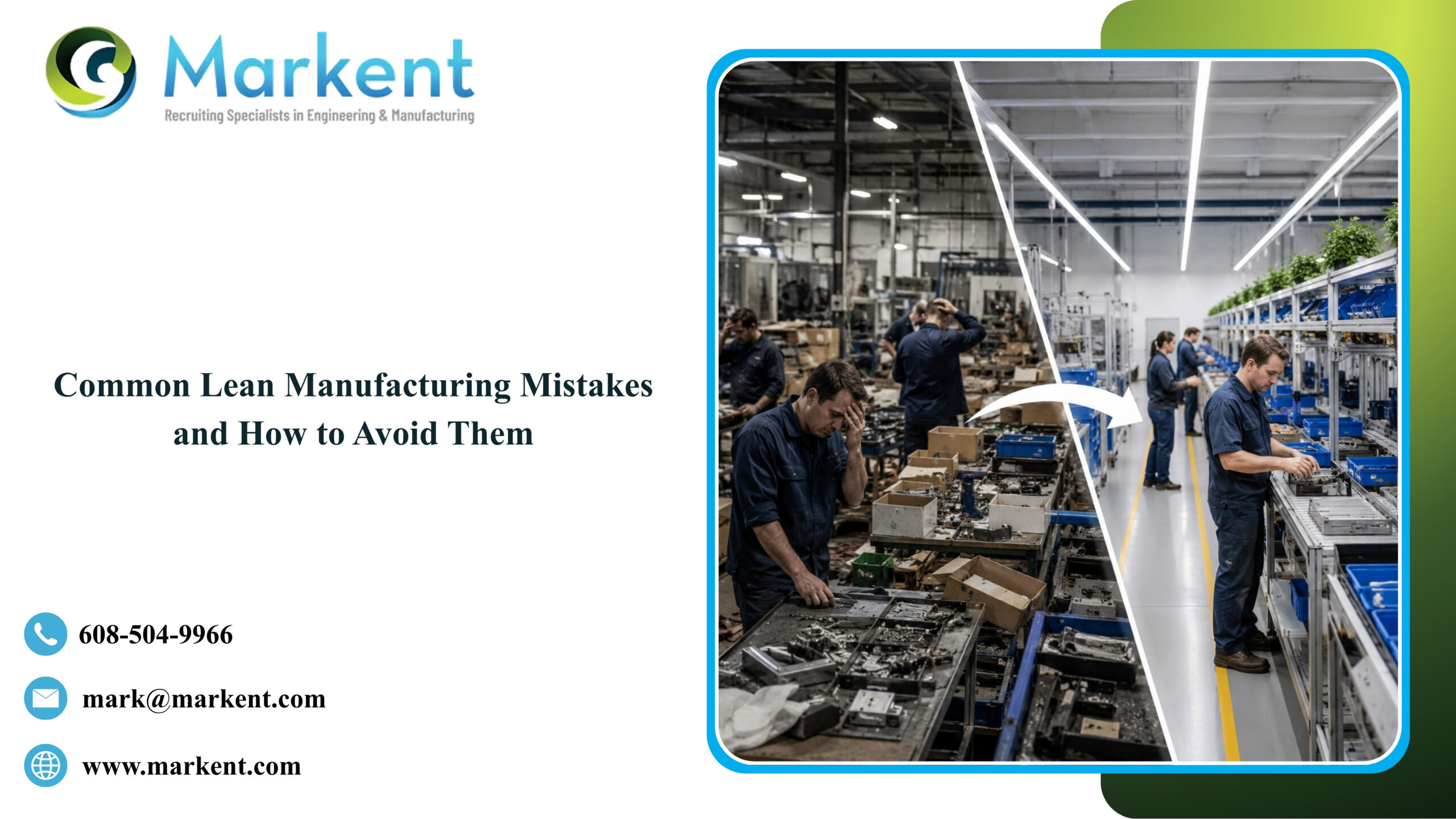
Lean manufacturing has become one of the most effective ways for manufacturers to improve efficiency, reduce waste, and stay competitive in today’s fast-changing market. With rising production costs, supply chain disruptions, and increasing customer expectations, companies are under constant pressure to do more with fewer resources. Lean offers a practical solution by helping organizations streamline operations while delivering greater value to customers.
However, implementing lean isn’t as simple as introducing a few new processes or holding a training session. Many companies invest time and money into lean initiatives but fail to achieve lasting results. In most cases, the problem isn’t the lean methodology; it’s how it’s implemented. Common mistakes can slow progress, reduce employee engagement, and limit the benefits of continuous improvement.
Whether you’re a manufacturing leader, recruiter, hiring manager, or professional looking to grow in the industry, understanding these pitfalls can help organizations build stronger teams and create more successful lean initiatives.
Treating Lean as a Short-Term Project
One of the biggest mistakes companies make is treating lean as a one-time project instead of a long-term strategy. After completing a few improvement initiatives, some organizations assume the work is finished.
Lean is designed to evolve with the business. Customer expectations, technology, and market conditions constantly change, which means improvement should never stop.
How to avoid it:
- Build a culture of continuous improvement.
- Set long-term improvement goals.
- Review processes regularly.
- Celebrate both small and major improvements.
Organizations that succeed with lean understand that continuous improvement becomes part of everyday operations.
Leaving Employees Out of the Process
Lean cannot succeed if employees are simply expected to follow new procedures without contributing ideas. The people working closest to production often know exactly where delays, waste, and inefficiencies exist.
When employees aren’t involved, organizations miss valuable opportunities for improvement and often face resistance to change.
How to avoid it:
- Encourage employees to share suggestions.
- Include production teams in improvement meetings.
- Recognize employee contributions.
- Create an environment where feedback is welcomed.
When employees feel a sense of ownership, lean becomes a team effort rather than a management initiative.
Making Cost Reduction the Only Goal
Reducing costs is one benefit of lean manufacturing, but it should never be the only objective.
Companies that focus exclusively on cutting expenses sometimes sacrifice quality, employee morale, or customer satisfaction. True lean creates value by improving processes, reducing waste, and delivering better products.
How to avoid it:
Measure success using several performance indicators, including:
- Product quality
- Customer satisfaction
- Delivery performance
- Employee engagement
- Productivity improvements
- Workplace safety
Balanced goals produce sustainable results.
Trying to Change Everything at Once
Some organizations become excited about lean and attempt to transform every department simultaneously. While enthusiasm is positive, too many changes can overwhelm employees and create confusion.
Instead of improving operations, teams struggle to keep up with constant adjustments.
How to avoid it:
Start with one process or department.
Measure the results, learn from the experience, and gradually expand improvements across the organization. Small successes build confidence and create momentum for larger projects.
Poor Communication Throughout the Journey
Lean transformations often fail because employees don’t understand why changes are happening. Without clear communication, rumors spread, and uncertainty grows.
Some workers even believe lean automatically means job cuts, which creates unnecessary fear.
How to avoid it:
Communicate openly from the beginning.
Explain:
- Why are improvements needed?
- How employees will benefit.
- What results are expected?
- How progress will be measured.
Regular communication builds trust and encourages collaboration.
Ignoring Data When Making Decisions
Successful lean organizations rely on facts, not assumptions. Implementing changes without measuring performance makes it difficult to know whether improvements are actually working.
Data provides clear direction and helps teams focus on the biggest opportunities.
How to avoid it:
Track meaningful metrics such as:
- Production cycle time
- Defect rates
- Equipment downtime
- Inventory levels
- Lead time
- On-time delivery
Review performance consistently and adjust strategies based on measurable results.
Not Investing in Employee Training
Lean tools are only effective when employees understand how to use them. Some companies introduce new systems but provide little education on their purpose.
Without proper training, employees may follow instructions without understanding how their work contributes to continuous improvement.
How to avoid it:
Provide ongoing training in:
- Lean principles
- Waste identification
- Problem-solving techniques
- Team collaboration
- Process improvement
Continuous learning helps organizations maintain long-term success rather than temporary improvements.
Copying Another Company’s Lean Strategy
Many manufacturers try to duplicate the success of industry leaders. While learning from successful organizations is valuable, every company has different products, customers, workflows, and challenges.
A strategy that works perfectly in one facility may not deliver the same results elsewhere.
How to avoid it:
Study industry best practices, but adapt them to your organization’s unique needs.
Successful lean programs are customized to fit the business rather than copied from someone else’s experience.
Losing Focus on Customer Value
Lean is ultimately about delivering more value to customers. Some organizations become so focused on improving internal efficiency that they overlook the customer experience.
Faster production means little if product quality declines or delivery becomes inconsistent.
How to avoid it:
Ask important questions during every improvement initiative:
- Does this improve product quality?
- Will customers receive products faster?
- Does it make service more reliable?
- Does it solve a customer problem?
Customer value should remain the foundation of every lean decision.
Overlooking Modern Technology
Lean manufacturing continues to evolve alongside digital transformation. Technologies such as automation, predictive maintenance, artificial intelligence, and real-time production monitoring help manufacturers further improve efficiency.
Companies that ignore these innovations may struggle to stay competitive.
How to avoid it:
Adopt technology that supports lean practices, including:
- Digital production dashboards
- Automated inventory tracking
- Predictive maintenance tools
- Real-time quality monitoring
- AI-assisted production planning
Technology works best when combined with skilled employees and strong lean principles.
Weak Leadership Support
Even well-planned lean initiatives can lose momentum if leadership becomes less involved after implementation begins.
Employees look to leaders for direction and commitment. When leaders stop participating, improvement efforts often slow down.
How to avoid it:
Leaders should:
- Visit production areas regularly.
- Support improvement initiatives.
- Remove barriers for employees.
- Recognize successful ideas.
- Encourage collaboration across teams.
Visible leadership reinforces the importance of continuous improvement.
Why Lean Skills Matter in Today’s Workforce
Manufacturers aren’t just investing in better equipment; they’re investing in better people. As lean practices become standard across the industry, employers increasingly seek professionals who can improve processes, solve problems, and adapt to change.
For recruiters and hiring managers, candidates with experience in lean manufacturing, continuous improvement, teamwork, and data-driven decision-making bring significant value. Beyond technical expertise, companies need professionals who communicate effectively, embrace innovation, and help create a culture of operational excellence.
Hiring individuals with these capabilities strengthens organizations and supports long-term business growth.
Final Thoughts
Lean manufacturing is far more than reducing waste or improving production speed. It’s a mindset built around continuous improvement, collaboration, customer value, and operational excellence. Organizations that avoid common mistakes, such as poor communication, limited employee involvement, rushed implementation, weak leadership, and inadequate training, are far more likely to achieve lasting success.
For manufacturers, lean creates stronger operations, higher quality, and greater resilience in an increasingly competitive market. For recruiters and hiring managers, it also emphasizes the importance of attracting professionals who can lead change, solve complex challenges, and contribute to a culture of continuous improvement.
In today’s manufacturing landscape, companies that combine effective lean practices with the right talent won’t simply keep up with change; they’ll lead it.